![Combe Martin Village History [The Little Parish with a Big Story]](https://primary.jwwb.nl/public/i/j/k/temp-bexcyixkrnloblaipglr/cmvhp-logo-01-june-2025-high.png?enable-io=true&enable=upscale&height=70 "Combe Martin Village History [The Little Parish with a Big Story]")
![Combe Martin Village History [The Little Parish with a Big Story]](https://primary.jwwb.nl/public/i/j/k/temp-bexcyixkrnloblaipglr/cmvhp-logo-01-june-2025-high.png?enable-io=true&width=200 "Combe Martin Village History [The Little Parish with a Big Story]")

The Royal Antediluvian Order of Buffaloes
Combe Martin Lodges
The Royal Antediluvian Order of Buffaloes has its earliest verifiable roots in 1822. Records indicate that the first known Lodge was established at the Harp Tavern on London's Great Russell Street, near the Drury Lane Theatre.
This Lodge was formed by stagehands and theatre technicians, after they were reportedly deprived of a long-standing privilege previously granted to them by the actors and artists of that era (raobgle.org.uk).
Visit Combe Martin Museum↗ to view local artefacts.
Published by Combe Martin Village History Project on June 23, 2025
Last modified on March 03, 2026
License for Use: CC BY-NC-SA | Attribution required | Non-Commercial Use


Motto or Guiding Maxim
“Nemo Mortalium Omnibus Horis Sapit” / “Justice, Truth and Philanthropy”
Overview of The Royal Antediluvian Order of Buffaloes
Combe Martin once hosted an active branch of the Royal Antediluvian Order of Buffaloes (R.A.O.B.), a long‑standing British fraternal and charitable organisation founded in 1822. A referenced historical document can be found on this page.
The Order’s members—commonly known as “The Buffs”—meet in local units called Lodges, where social fellowship is combined with organised charitable fundraising.
Although the R.A.O.B. shares some surface similarities with Freemasonry, the two bodies are entirely separate organisations with distinct histories, structures, and traditions.
Local Activity in Combe Martin
Evidence held in Combe Martin Museum, parish records, and surviving artefacts—such as certificates, regalia references, and named officers—confirms that one or more Buffalo Lodges operated in Combe Martin during the 19th and 20th centuries.
These Lodges are now defunct, reflecting the wider national decline in membership after the 1970s, when many local branches across Britain closed.
Local oral history and museum references indicate that Combe Martin’s Buffaloes reportedly met at the Combe Martin Village Hall during their most active period.
Surviving documentation is fragmentary and complete Lodge minute books are rare. The presence of Buffaloes in the village is nevertheless well‑attested through:
-
Plaques and certificates naming local members
-
Mentions in parish and community records
-
Artefacts held by Combe Martin Museum
-
References in local newspapers (where available)
These traces help explain the initials, titles, and ceremonial terms that appear on historic objects found across the parish.
The Wider Order
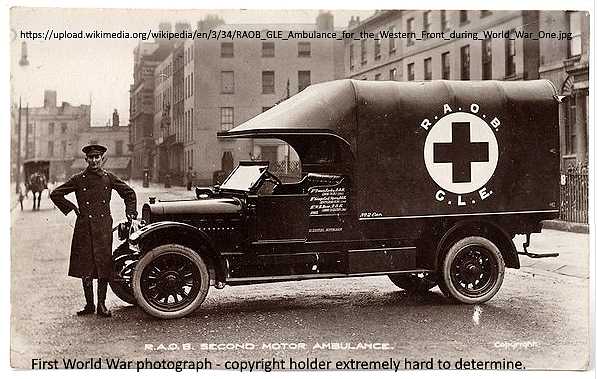
Since its founding in 1822, the R.A.O.B. has maintained Lodges throughout the UK and overseas. The Order contributed to national charitable efforts during both World Wars and continues to operate today through the R.A.O.B. Grand Lodge of England (GLE) and other recognised jurisdictions.
Active Lodges still support local and national charities, maintaining the Order’s long‑standing philanthropic role.
The attached referenced document, created by the Combe Martin Village History Project (CMVHP), helps to explain the Royal Antediluvian Order of Buffaloes (RAOB).
We welcome any information about the Combe Martin "Buffs", and we will protect identities and confidentiality. Contributions can be forwarded to our Admin account. Thankyou.

Royal Antediluvian Order of Buffaloes — Verified Historical Summary
-
The Royal Antediluvian Order of Buffaloes (RAOB) was founded in August 1822 at the Harp Tavern near Drury Lane, London. This venue was a gathering place for theatre workers, performers, and stage hands.
-
The founders were Joseph Lisle, an artist, and William Sinnett, a comedian, supported by fellow theatre technicians. Their aim was to create a fraternal society offering mutual support, benevolence, and companionship.
-
The name “Buffaloes” was inspired by the popular early‑19th‑century song “We’ll Chase the Buffalo.” The song was widely known in theatre circles at the time.
-
The connection to the song “We’ll Chase the Buffalo” is commonly repeated in RAOB tradition. However, historians note that the exact origin of the name is not definitively proven.
-
The song association is plausible and widely accepted within the order, yet documentary proof from 1822 directly linking the founding name choice to that specific song is limited.
-
The RAOB developed a lodge‑based structure with rituals and ceremonies, sharing some similarities with Freemasonry but remaining entirely independent of it. The order has never been a Masonic organisation.
-
The order’s motto is “No Man Is At All Times Wise” (Latin: Nemo Mortalium Omnibus Horis Sapit). This reflects the society’s emphasis on humility and mutual support.
-
Its guiding maxim is “Justice, Truth and Philanthropy.” These principles underpin the order’s charitable and benevolent activities.
-
The RAOB is governed by formal documents including a Rule Book, a Manual of Instruction, and Ceremony Lectures, issued and periodically revised by the Grand Lodge of England. These texts define lodge procedures, officer roles, and ritual forms.
-
The order has a long history of charitable work, supporting members, families, and wider community causes. Benevolence remains central to its identity.
-
The RAOB continues to operate today, with active lodges across the United Kingdom and internationally. Its presence is particularly strong in countries with historical links to Britain.